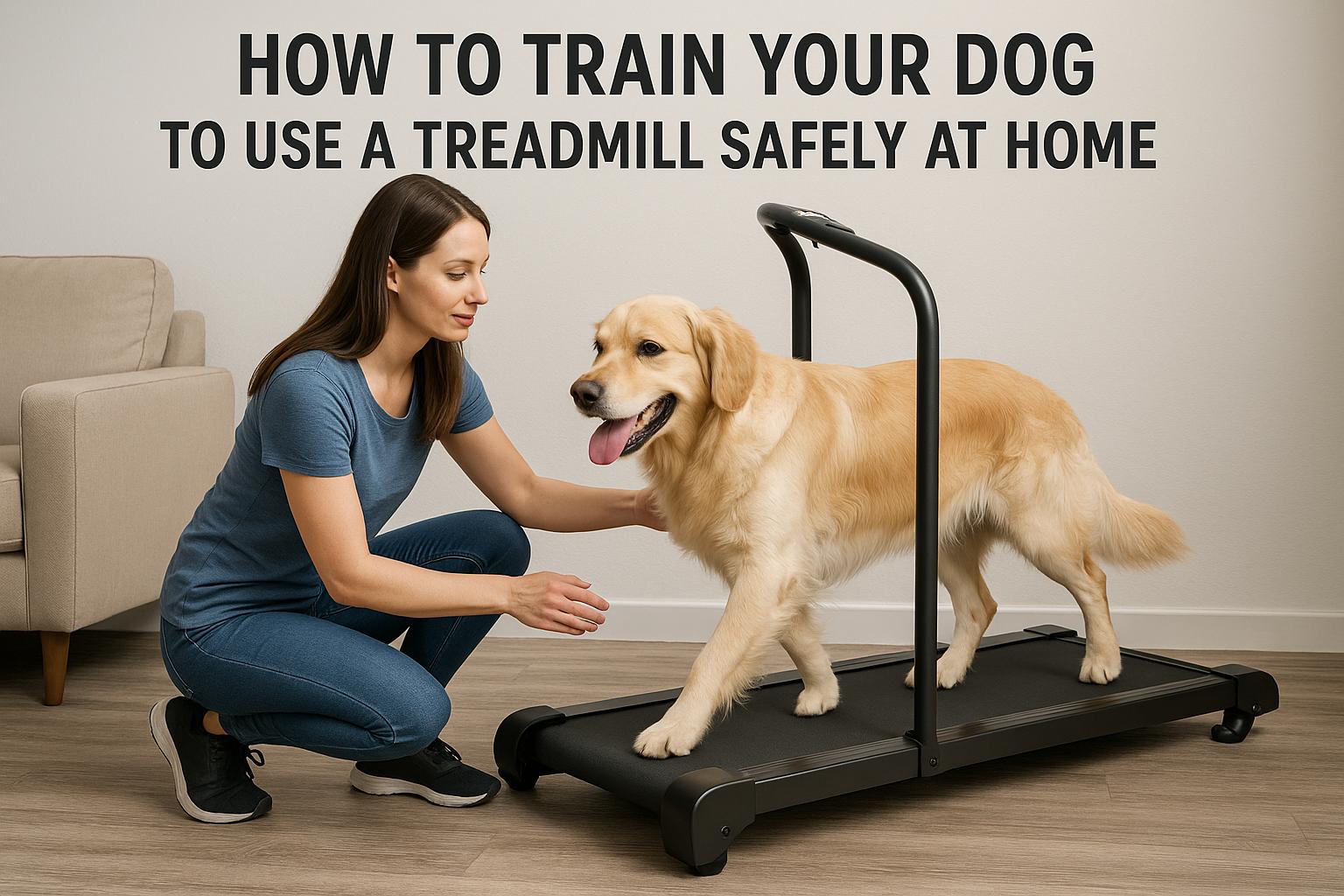
How to Train Your Dog to Use a Treadmill Safely at Home
How to Train Your Dog to Use a Treadmill Safely at Home
Training a dog to use a treadmill at home can be genuinely useful, but only when it is done slowly, safely, and with realistic expectations. From my experience, the biggest mistake owners make is assuming a dog will understand the machine right away. Most dogs need time to observe it, trust it, and learn that stepping onto a moving surface is not something to fear. Done well, treadmill work can support conditioning, routine, and mental balance. Done poorly, it can create stress, confusion, or even injury.
This guide looks at how I would approach treadmill training in a practical home setting, especially for owners dealing with bad weather, limited time, or a dog with extra energy to burn. I will also cover what to look for in a dog treatmill, why a Heavy-duty treadmill may matter for larger breeds, and how features such as the ability to Adjust resistance can make workouts more tailored. In short, the goal is not simply to get a dog moving indoors, but to do it in a way that respects the animal’s confidence, age, and physical limits.
Key point: A treadmill should support your dog’s exercise routine, not replace outdoor walks, sniffing opportunities, and normal play.
Why a Dog Treadmill Can Be Useful at Home
There are a few situations where a treadmill becomes more than a novelty. Bad weather is the obvious one. In winter, during heavy rain, or in areas with dangerous heat, outdoor exercise can become shorter or less consistent than many dogs really need. A treadmill gives owners a controlled way to maintain activity levels when daily walks are disrupted.
Just as important, some dogs struggle when their energy is not managed well. I have seen this most clearly in young, active breeds and in large dogs that become restless indoors. They may pace, bark, chew furniture, or seem unable to settle. A structured treadmill session will not solve every behavior issue, but it can help release energy and create a more predictable routine. That routine often matters as much as the exercise itself.
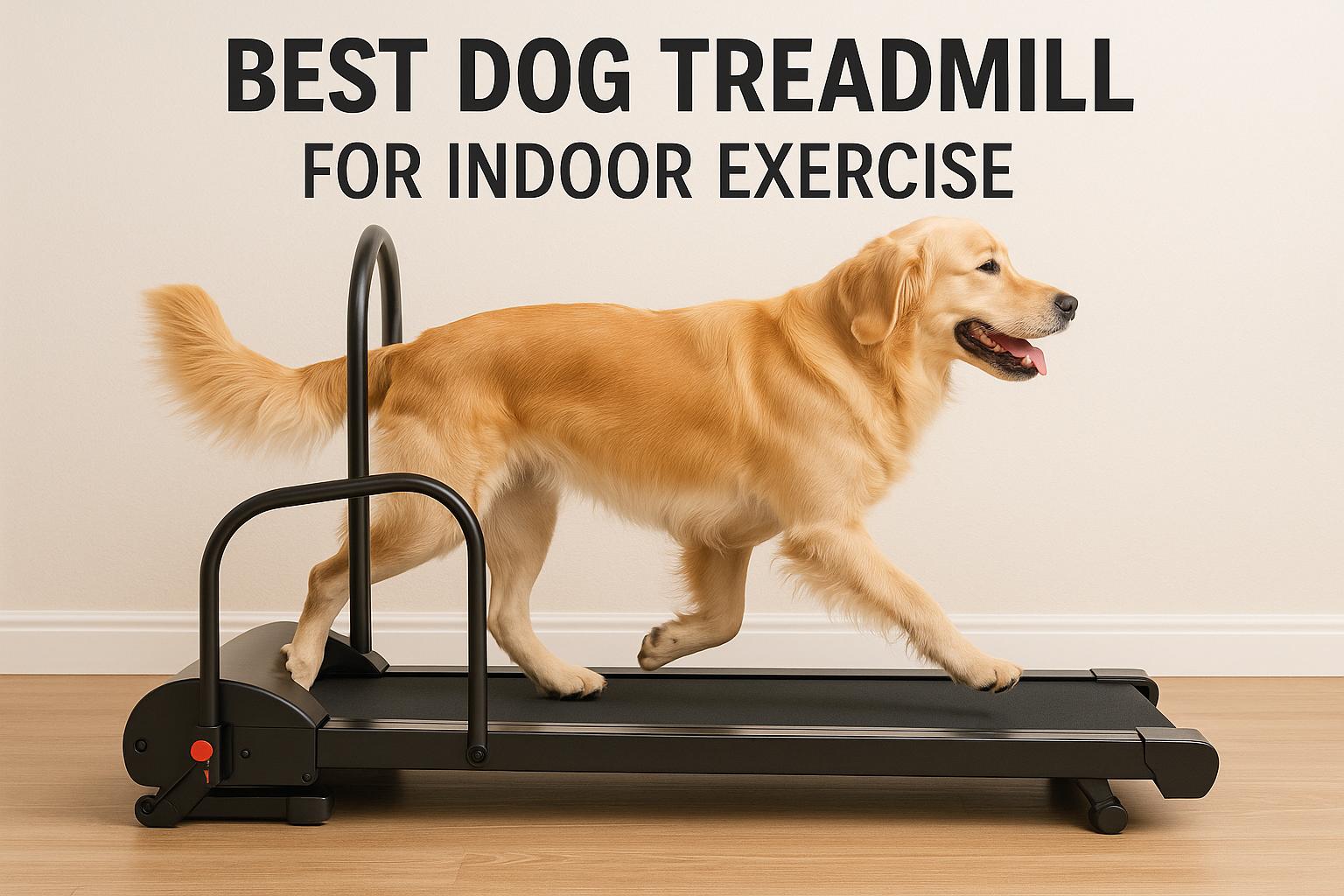
For busy households, indoor fitness equipment designed specifically for dogs can be practical because it allows short, regular exercise sessions without depending entirely on park access or daylight hours. Some owners also prefer it for rehabilitation support or controlled conditioning, though in those cases I believe veterinary guidance is especially important.
“The safest treadmill routine is the one built around the dog’s pace, not the owner’s schedule.”
If you are exploring equipment options, it is worth looking at a purpose-built model rather than adapting a human machine. Products like [asin="B0CT682ZHG",type="standard"] are designed with canine use in mind, and that difference can matter when you consider running surface, side panels, noise, and speed control.
When a Treadmill Is Appropriate for Your Dog
Not every dog is a good treadmill candidate. Age, breed, health status, and baseline fitness all matter. Puppies are still developing, and repetitive exercise on a treadmill may not be ideal for immature joints. Senior dogs can sometimes benefit from gentle controlled movement, but only if arthritis, balance, and cardiovascular ability have been properly considered. For brachycephalic breeds, such as Bulldogs or Pugs, extra caution is needed because breathing limitations can make structured exercise harder to regulate.
Breed tendencies matter too. High-drive working or sporting breeds often adapt well once properly introduced, while sensitive or noise-averse dogs may need significantly more time. A dog that is naturally cautious may never love treadmill work, and that is perfectly fine. In my view, successful training means respecting the individual dog, not forcing every dog into the same routine.
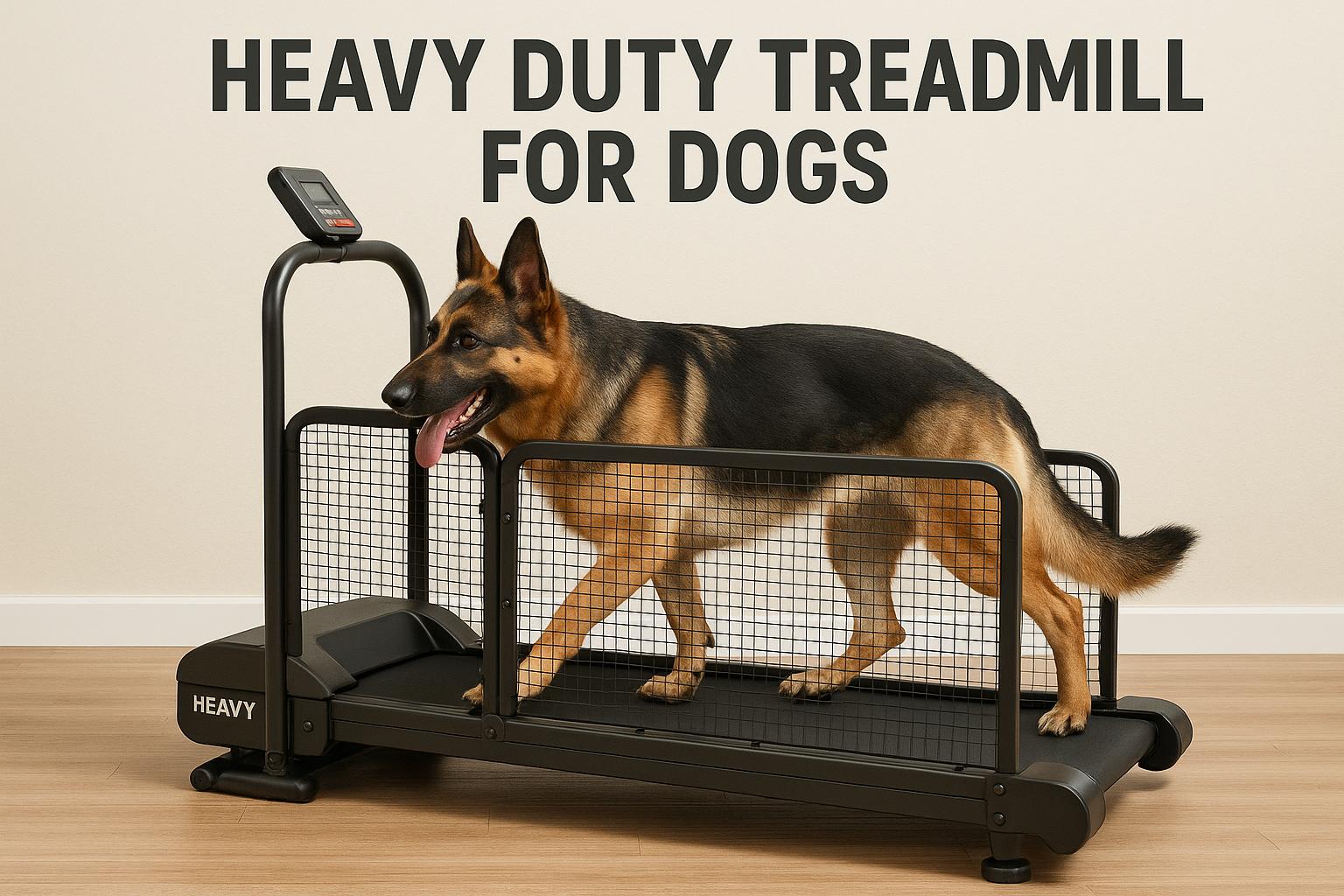
You should ask a veterinarian first if your dog is overweight, recovering from injury, shows any gait irregularity, or has heart, respiratory, spinal, or joint concerns. This is especially true for larger breeds, where body weight can amplify strain. Some home equipment is marketed for impressive load capacity, and a Heavy-duty treadmill can indeed be helpful for big dogs, but weight support alone does not guarantee that the exercise is medically appropriate.
If your dog limps, pants excessively at low effort, drags paws, or resists movement in unusual ways, pause training and consult your veterinarian before continuing.
Choosing a Safe Setup Before Training Begins
Before any training starts, I would focus on the environment. The treadmill needs to be appropriately sized for your dog’s stride. A running surface that is too short encourages choppy movement and poor posture. Speed control is equally important. Ideally, the machine should increase in small, manageable increments rather than jump abruptly to a pace that surprises the dog.
A quiet location helps more than many people realize. Dogs often react not only to motion but to vibration, echo, and mechanical noise. Place the machine on stable flooring with enough space around it for you to walk beside your dog. The surrounding area should be non-slip so exits and entries are safe. Clear away clutter, cords, and anything that might startle the dog if knocked over.
When comparing options, I usually look for a stable frame, straightforward controls, low noise, and a speed range that allows true beginner work. If the model allows you to Adjust resistance, that can be useful later for more tailored conditioning, though I would not use resistance early in training. For households with medium to large dogs, products such as [asin="B0GXB46V8Z",type="standard"] and [asin="B0DR2RSYTZ",type="standard"] may be worth reviewing alongside the primary model, particularly if you need different size or feature configurations.
| Property | What to Look For | Why It Matters |
|---|---|---|
| Running surface | Long enough for a natural stride | Reduces awkward gait and hesitation |
| Speed control | Gradual, precise adjustments | Helps dogs learn without sudden stress |
| Noise level | Low, steady motor sound | Improves confidence in sensitive dogs |
| Frame strength | Stable, heavy-duty build | Supports larger dogs more safely |
| Surroundings | Quiet, non-slip area | Prevents slips and helps concentration |
Helping Your Dog Get Comfortable With the Machine
The first session should not involve movement at all. Let your dog inspect the treadmill while it is switched off. Allow sniffing, walking around it, and stepping near it without any pressure. I usually reward curiosity immediately. A treat dropped near the edge, then on the deck, can help create a positive association. Praise should stay calm and matter-of-fact; overexcited encouragement can make some dogs more uncertain.
Once your dog is comfortable being near the machine, encourage standing on it briefly while it remains off. Keep these moments short. The purpose is not endurance but confidence. If your dog steps off, simply reset. Avoid pulling on the leash or physically lifting the dog onto the machine unless there is a specific reason and the dog remains relaxed.
Food rewards are especially effective here. They turn a strange object into a predictable place where good things happen. Over a few sessions, most dogs become less suspicious. Some owners find that using especially high-value treats makes the process smoother. For additional gear details or current offers on a treadmill designed for canine indoor workouts, you can [url="https://www.amazon.com/dp/B0CT682ZHG?ref=t_ac_view_request_product_image&campaignId=amzn1.campaign.1VFGY6B4PMYLV&linkCode=tr1&tag=simonsreccos-20&linkId=amzn1.campaign.1VFGY6B4PMYLV_1779955716737",name="check the available Moysoon treadmill options here",title="This link leads to the Moysoon dog treadmill product page"].
Step-by-Step Treadmill Training at Home
When your dog is relaxed standing on the machine, begin with the treadmill at its slowest possible setting. I recommend sessions measured in seconds, not minutes. Stay beside your dog, use a leash only for light guidance if needed, and keep your body language steady. The first objective is a few calm steps forward. Stop before the dog becomes anxious.
From there, progress in very small increments. One minute of smooth walking is better than five minutes of nervous, uneven motion. Over several days or weeks, gradually increase duration as comfort improves. The dog should remain able to maintain a natural gait without scrambling, leaning, or looking distressed.
Stay next to your dog during training. Your presence offers visual guidance and allows you to intervene immediately if something looks off. I do not recommend standing behind the treadmill or leaving a dog to “figure it out.” The safest approach is patient and interactive. If your dog thrives on routine, try short sessions at the same time each day so the machine becomes part of a predictable pattern rather than an unpredictable event.
- Start with the treadmill off and reward calm investigation.
- Encourage your dog to stand on the deck briefly.
- Switch on the treadmill at the slowest speed for a few seconds.
- Reward calm walking and stop early.
- Repeat over multiple sessions, increasing duration gradually.
- Only change speed after your dog shows relaxed, confident movement.
- Useful for exercise during bad weather
- Helps active dogs release excess energy indoors
- Supports short, structured daily routines
- Can offer more controlled pacing than outdoor walks
- Some dogs never feel comfortable on a treadmill
- Poor setup or fast progression can cause stress
- It cannot replace outdoor enrichment and sniffing
- Unsuitable for certain medical conditions without veterinary advice
Safety Rules to Follow During Every Session
The most important rule is simple: never leave your dog unattended on a moving treadmill. Even a well-trained dog can misstep, panic, or tire unexpectedly. Supervision is not optional. I would also avoid tying a dog in place or relying on restraint systems that prevent natural movement.
Watch continuously for signs of stress or fatigue. These include pinned ears, repeated attempts to jump off, excessive panting unrelated to room temperature, lagging behind the belt, stumbling, or a choppy gait. If anything looks abnormal, stop immediately. Safe treadmill work should look smooth and relatively calm, not forced or frantic.
Hydration, room temperature, and timing after meals matter too. Do not conduct hard sessions right after eating, and avoid intense exercise in overheated rooms. Keep the machine clean and inspect moving parts regularly. Maintenance is easy to overlook, but it contributes to both safety and noise reduction.
Common Mistakes and How to Avoid Them
The first common mistake is moving too fast in training. Owners see one successful short session and assume the dog is ready for longer work. In reality, confidence develops gradually. If you increase speed or duration too quickly, hesitation often returns. Progress is rarely linear, and setbacks are normal.
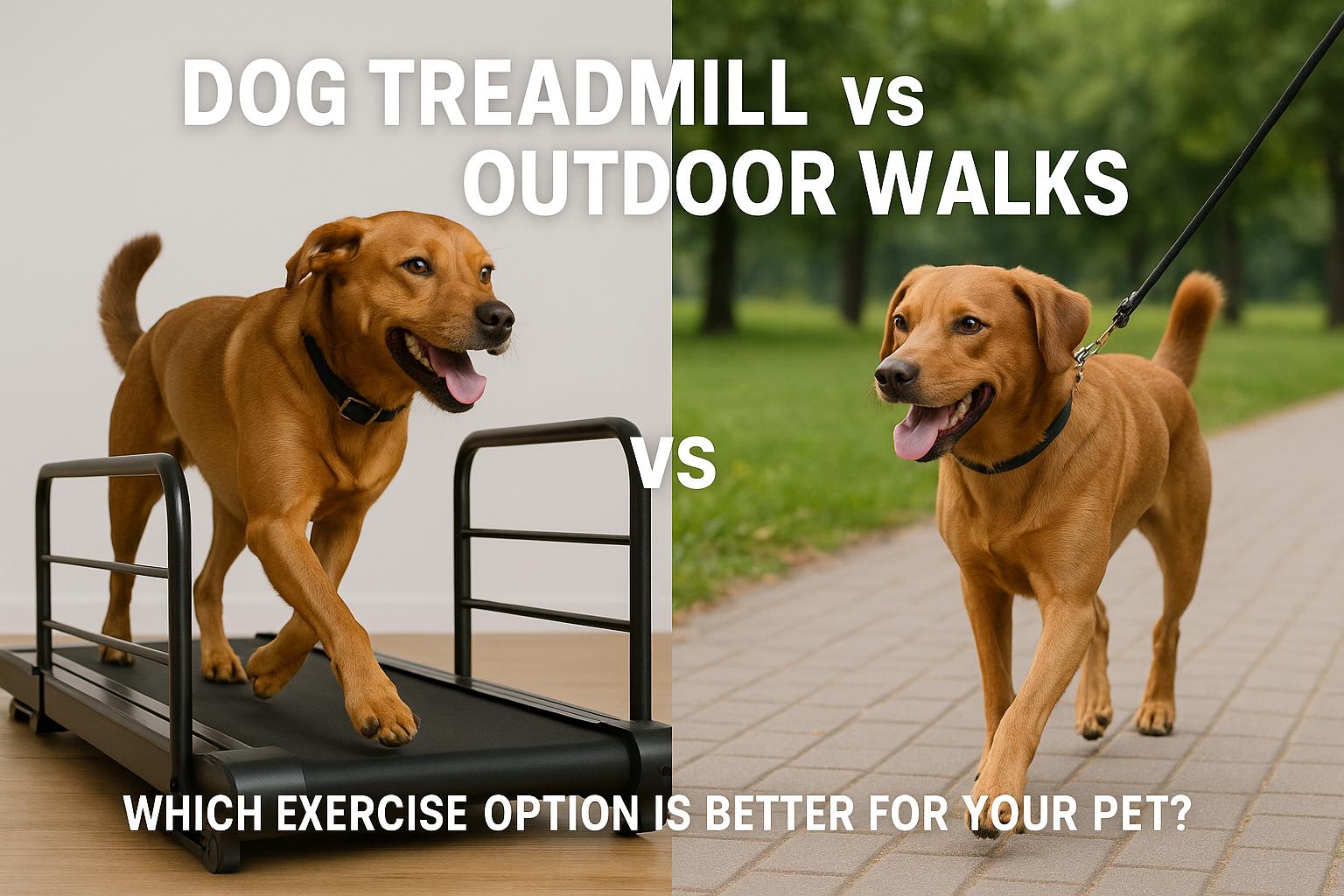
The second mistake is using the treadmill as a stand-in for all walks. This is where I think owners need to be honest with themselves. Physical movement is only one part of canine well-being. Dogs also need variety, smells, changing terrain, social exposure, and the simple pleasure of being outside. A treadmill is a tool, not a complete lifestyle solution.
Another issue is choosing equipment without considering body size and behavior. A small, unstable machine may not suit a large, energetic dog. Likewise, overly advanced features are not necessarily useful if core stability and usability are lacking. In my experience, the best machine is usually the one that is quiet, sturdy, and easy to control rather than the one with the longest feature list.
Building a Healthy Long-Term Exercise Routine
For long-term success, treadmill time should complement outdoor activity, not compete with it. I like to think of it as part of a balanced weekly routine. On stormy days, the treadmill may carry more of the workload. On pleasant days, it may be unnecessary. Flexibility is part of responsible use.
Tracking progress helps. Note session length, speed, attitude, and recovery. If your dog seems happier, settles better afterward, and moves well during sessions, you are probably on the right path. If enthusiasm drops or soreness appears, scale back. Dogs change over time, and exercise plans should change with them.
For owners ready to explore a purpose-built option, I recommend taking a practical look at dimensions, controls, and current discounts rather than buying on impulse. You can [url="https://www.amazon.com/dp/B0CT682ZHG?ref=t_ac_view_request_product_image&campaignId=amzn1.campaign.1VFGY6B4PMYLV&linkCode=tr1&tag=simonsreccos-20&linkId=amzn1.campaign.1VFGY6B4PMYLV_1779955718746",name="discover the available Moysoon dog treadmill variants here",title="This link leads to the Moysoon dog treadmill product page"]. It is one of the more practical routes if you want indoor fitness equipment designed specifically for dogs, particularly for homes that need a stable setup for regular indoor exercise.
My Final Recommendation
If you decide to train your dog on a treadmill, keep the process calm, gradual, and observant. Choose a machine that fits your dog’s size, use very short beginner sessions, and never sacrifice confidence for speed. Above all, remember that the goal is not to create a perfect treadmill athlete. It is to support your dog’s health and routine in a safe, reasonable way. If that sounds like a useful addition to your home setup, review the options, compare features carefully, and try a model built for canine safety and steady indoor conditioning.
- help
Can any dog learn to use a treadmill?
No. Many dogs can learn with patient training, but some remain too fearful or physically unsuitable. Temperament, age, health, and breed all influence success.
- help
How long should a beginner session last?
For a true beginner, I would start with just a few seconds to one minute at a very slow speed, depending on comfort. Short positive sessions are better than pushing too far.
- help
Is a dog treadmill a replacement for daily walks?
No. It can help with physical exercise, especially in bad weather, but dogs still need outdoor enrichment, sniffing, and varied experiences.
- help
What features matter most in a dog treadmill?
Look for a stable frame, appropriate size, gradual speed control, low noise, and enough space to guide your dog safely. For large breeds, a heavy-duty design is especially important.