Best Dog Treadmill for Indoor Exercise: What to Look for Before You Buy
Best Dog Treadmill for Indoor Exercise: What to Look for Before You Buy
Buying a dog treatmill is not as simple as choosing the first machine with a wide running belt and a strong frame. From my experience covering pet gear and speaking with owners of high-energy, overweight, and weather-limited dogs, the better question is this: what kind of indoor fitness equipment designed specifically for dogs actually supports safe, consistent exercise? A treadmill can be useful, but only when it fits the dog, the home, and the training routine.
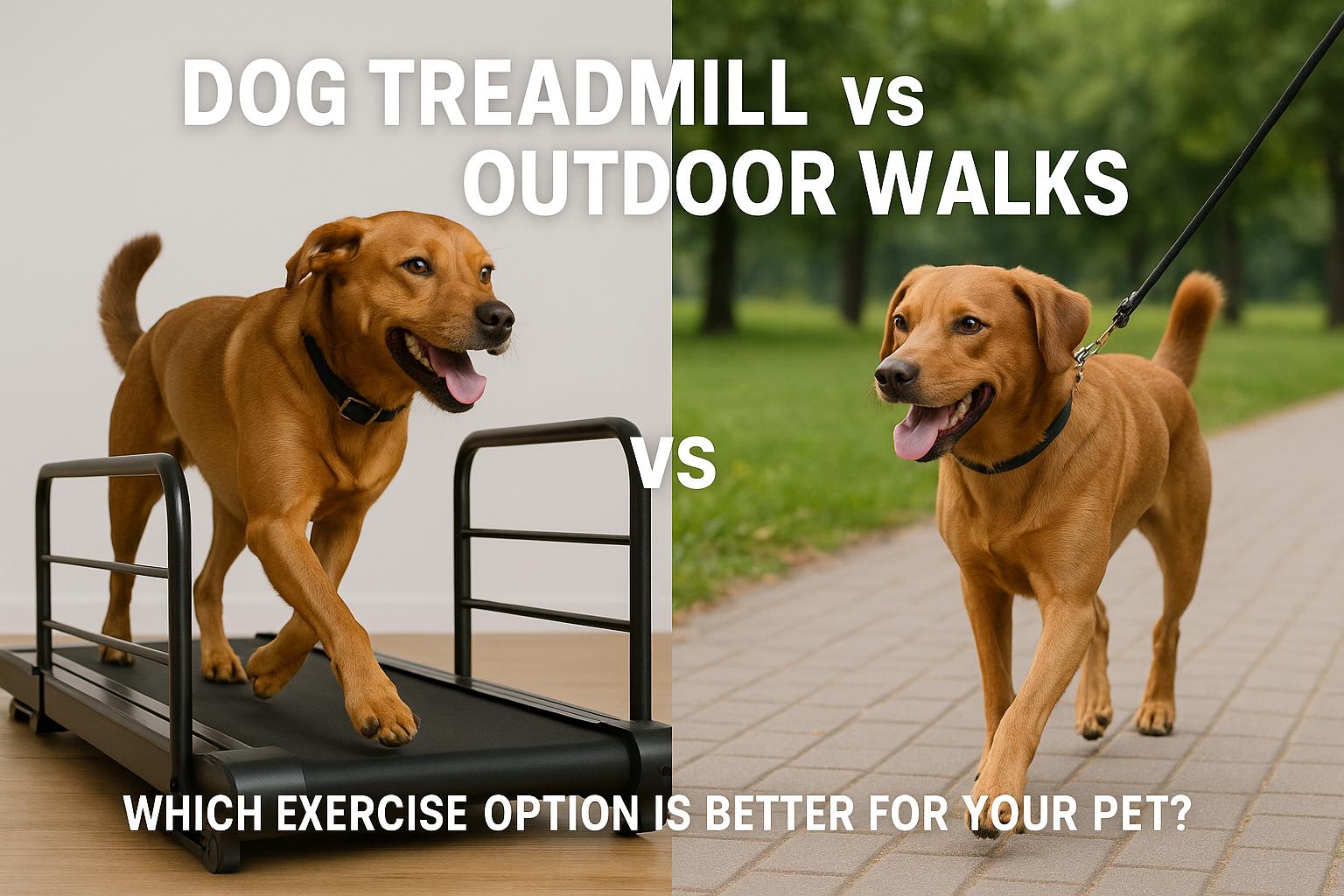
In recent years, I have noticed a clear shift in how owners approach canine exercise. More people now need practical ways to keep dogs active during rain, heat, snow, or long workdays. That is where a purpose-built treadmill can make sense. It is not a replacement for walks, sniffing, play, or socialization. However, it can be a reliable supplement that helps maintain conditioning and routine.
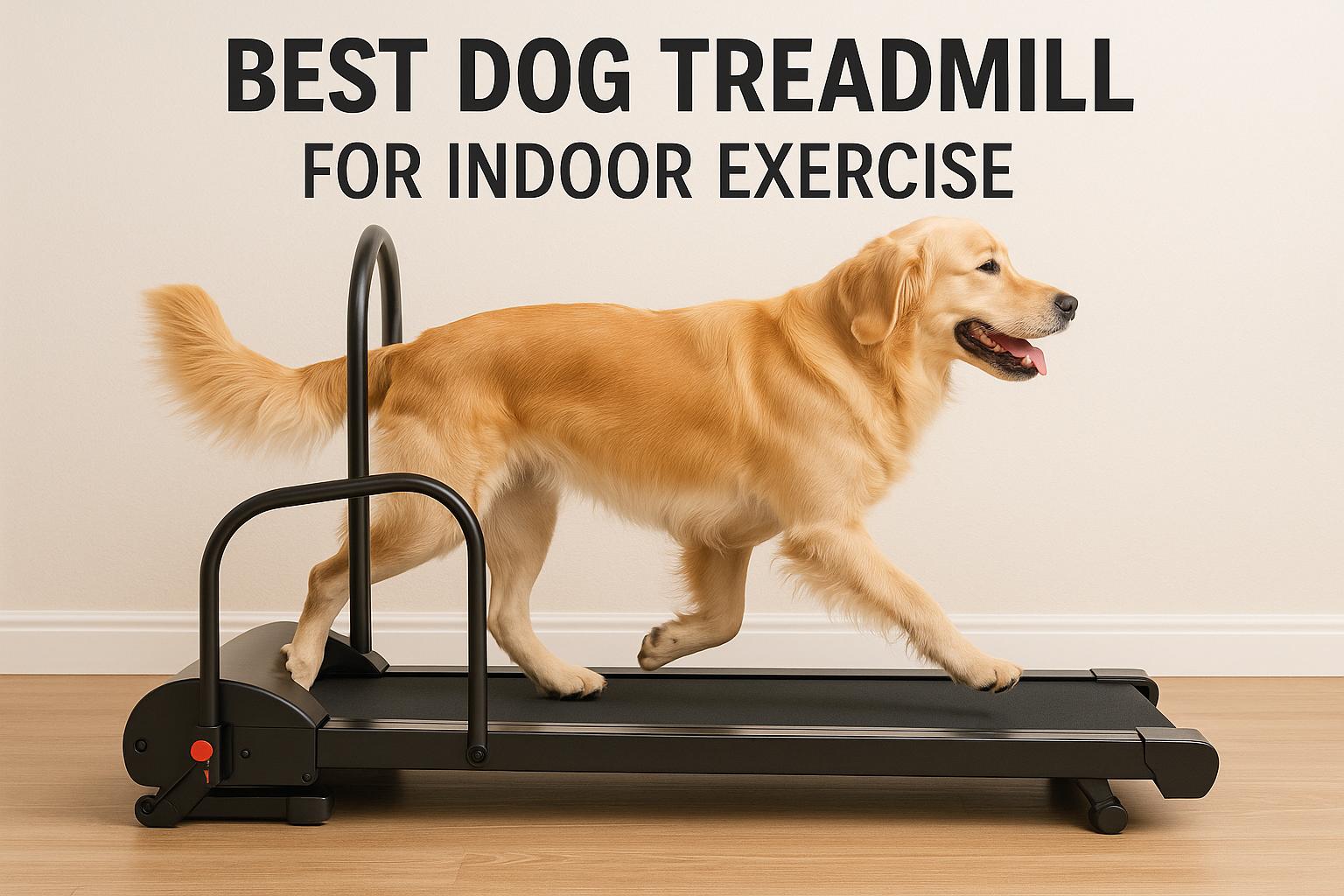
Quick takeaway: The best dog treadmill is the one that matches your dog’s stride, temperament, and training level while offering stable construction, smooth speed control, quiet operation, and dependable safety features.
If you are currently comparing options, you can discover current variants and promotions here: [url="https://www.amazon.com/dp/B0CT682ZHG?ref=t_ac_view_request_product_image&campaignId=amzn1.campaign.1VFGY6B4PMYLV&linkCode=tr1&tag=simonsreccos-20&linkId=amzn1.campaign.1VFGY6B4PMYLV_1779955716737",name="see available dog treadmill models",title="This link leads to available dog treadmill models on Amazon"]
Why a Dog Treadmill Can Support Indoor Exercise
A treadmill is most helpful when life gets in the way of ideal outdoor exercise. Bad weather is the obvious example. In heavy rain, icy conditions, or extreme summer heat, many dogs lose activity time quickly. For energetic breeds, that often leads to restlessness, pacing, barking, or destructive chewing. In those situations, a treadmill can help channel energy in a structured way indoors.
Busy schedules matter too. I do not think a machine should become an excuse to avoid walks altogether, but I have seen how a short treadmill session can help owners maintain a routine on work-heavy days. Even 10 to 20 minutes of controlled movement may be preferable to no exercise at all, especially for dogs that rely on daily physical output to stay balanced.
Just as importantly, treadmills can complement outdoor routines rather than replace them. A morning walk might still provide mental enrichment through scent work and exploration, while an indoor treadmill session later in the day adds steady cardiovascular work. That combination can be particularly useful for dogs that need weight management support or for athletic breeds that become under-stimulated easily.
“Indoor exercise works best when it is structured, supervised, and paired with normal walks and enrichment rather than treated as a total substitute for real-world activity.”
Key Features to Look for Before You Buy
The first thing I examine in any dog treadmill is the quality of speed control. A machine should offer adjustable speed in increments that feel predictable rather than abrupt. Smooth transitions matter because dogs can become anxious or misstep if the pace changes too sharply. Some models also let you Adjust resistance or vary the running challenge. That can be useful for conditioning, but only when introduced gradually.
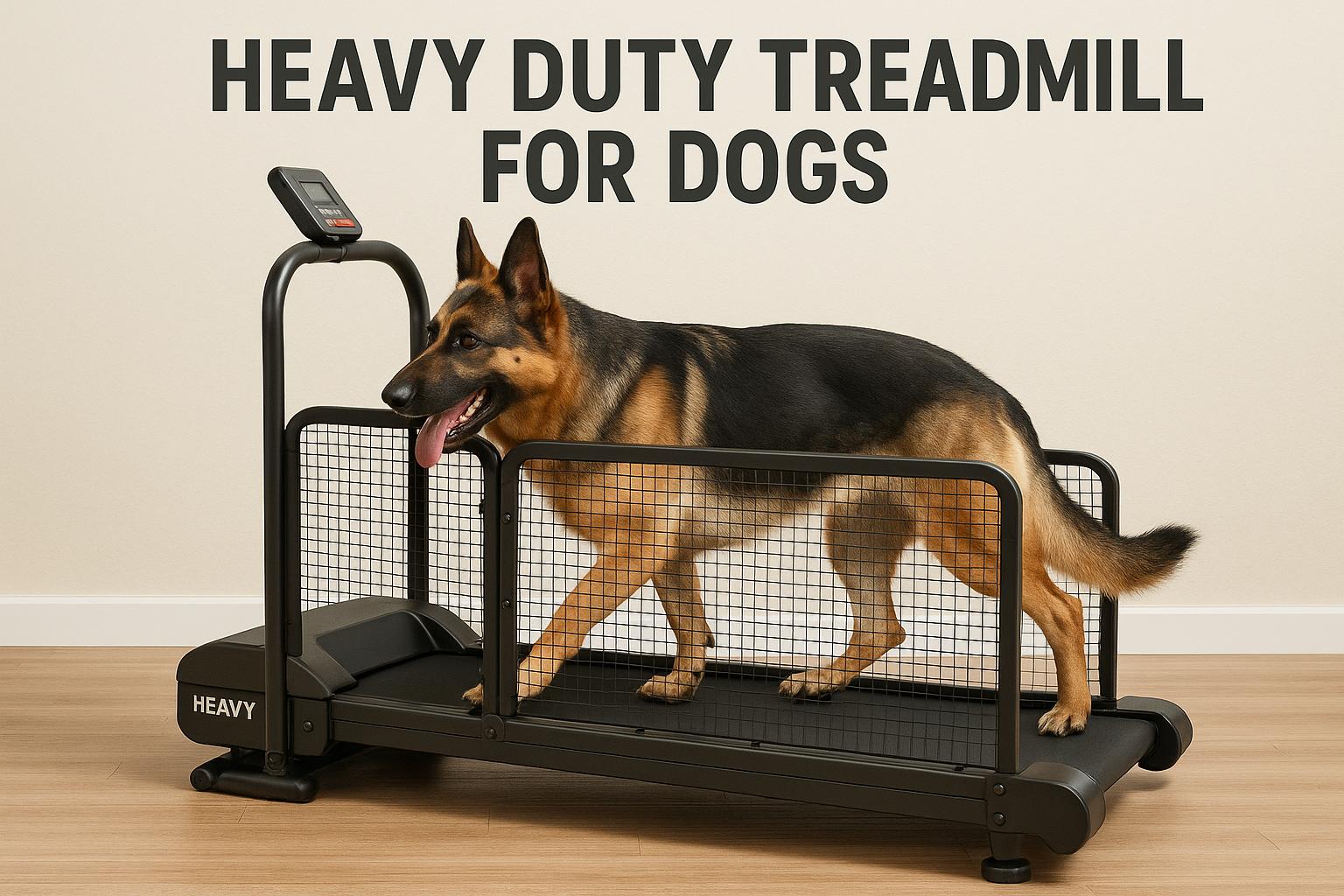
The second major factor is the frame and motor. A stable machine inspires more confidence in the dog and the handler. If the frame flexes, rattles, or drifts during use, many dogs will hesitate. A Heavy-duty treadmill with proper support can make a real difference, especially for large breeds. For owners of heavier dogs, the headline feature is often weight capacity. Some current models advertise support up to 300 pounds, which is especially relevant if you have a large dog and want more structural margin.
Noise is another make-or-break feature. In my experience, many dogs tolerate movement better than motor noise. A quieter motor and reduced vibration can shorten the adjustment period dramatically. If your dog is cautious by nature, this may matter more than extra training modes or display functions.
Then there are the safety essentials: emergency stop options, side rails, tether points designed for dogs, and a non-slip belt surface. These are not luxury extras. They are baseline requirements. If a machine lacks a reliable emergency stop system, I would move on.
Feature | Why It Matters | What to Check |
|---|---|---|
Adjustable speed | Supports gradual training and safer pacing | Look for smooth transitions and low starting speeds |
Frame stability | Reduces shaking and hesitation | Check steel construction and overall footprint |
Quiet motor | Helps nervous dogs adapt indoors | Read owner feedback about noise and vibration |
Safety stop | Prevents accidents during missteps or panic | Confirm emergency stop system and attachment design |
Resistance options | Adds training variety for conditioned dogs | Use only if your dog already moves confidently |
Choosing the Right Size for Your Dog
Size is where many buyers make the most expensive mistake. It is not enough for a dog to merely fit on the treadmill. The belt must allow a natural stride length, comfortable head carriage, and enough room that the dog does not feel boxed in. I always suggest focusing on your dog’s movement pattern rather than weight alone.
A long-legged dog needs sufficient belt length to extend naturally at a walk or trot. Likewise, width matters. If the belt is too narrow, the dog may shorten its gait and become tense. You should also check the side rail spacing, because a broad-chested or thick-coated dog may feel restricted even if the listed measurements suggest compatibility.
Weight capacity remains important, especially when shopping for larger breeds. A treadmill built for small and medium dogs may technically run, but it may not remain stable under sustained use by a heavier dog. This is where a robust, heavy-duty unit offers better long-term confidence.
Several current Moysoon models are being marketed toward a range of dog sizes, including larger breeds, with an emphasis on indoor exercise and stronger frame support. If you are comparing the brand’s currently listed options, these are the main product references discussed by shoppers.
Practical rule: A treadmill should let your dog walk and trot without constantly reaching the front edge or crowding the sides. If the posture looks compressed, the machine is too small.
Manual vs Motorized Dog Treadmills
There is no universal winner between manual and motorized dog treadmills. The better choice depends on your dog’s confidence, fitness level, and your own patience during training. Manual treadmills give the dog more control over pace, which some experienced or highly driven dogs may prefer. They also tend to involve fewer electrical components and may require less mechanical servicing.
That said, motorized machines are generally easier for structured exercise programs. They allow you to set a pace and keep it steady, which is valuable for weight management, rehabilitation support under professional guidance, and routine conditioning. Beginners often do better with predictable speed settings because the handler controls the progression carefully.
Noise, maintenance, and budget all matter here. Manual units may be quieter in some cases, but they are not automatically easier to use. Some dogs simply do not understand them. Motorized machines, meanwhile, can be more intuitive once the dog learns the belt movement, but buyers should pay attention to motor quality, control panel clarity, and warranty coverage.
Motorized treadmills offer controlled pace and easier routine building
Manual treadmills can allow more natural self-paced effort
Both can support indoor exercise when matched to the dog’s temperament
Motorized units may create more noise and require more maintenance
Manual units can be harder for beginners to understand
Wrong size or poor stability makes either type less effective
Safety and Comfort Considerations
Safety begins with the belt surface. A non-slip texture gives the dog traction and confidence, especially during the first weeks of training. Side rails can help some dogs stay centered, but the overall space should still feel open rather than confining. I also look for speed transitions that feel progressive, not jerky. Abrupt changes increase stress and can turn a neutral training session into a negative memory.
Placement inside the home matters more than many people expect. I recommend a calm room with good ventilation, minimal foot traffic, and enough space around the treadmill for the handler to work safely. If the machine is placed in a noisy corridor, near a television, or in a cluttered garage, many dogs struggle to relax.
Hydration, paw checks, and temperature awareness belong in the routine as well. Indoor exercise is weatherproof, but it is still exercise. Dogs can overexert on a treadmill because the pace remains consistent and there are fewer natural pauses than in a normal walk.
Training Your Dog to Use a Treadmill
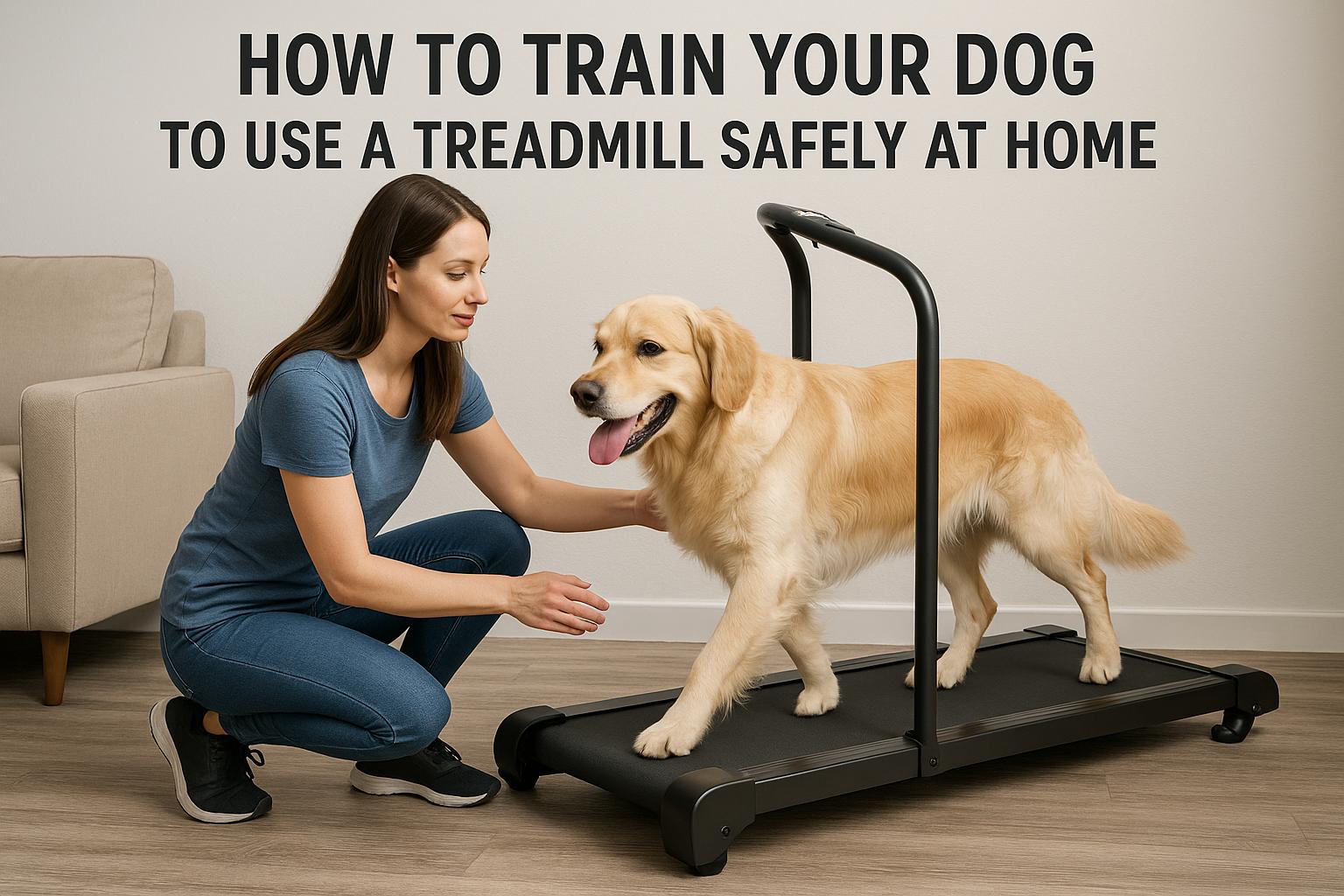
In my experience, the biggest mistake is rushing the process. Dogs should first investigate the machine while it is turned off. Let them sniff it, stand near it, and receive rewards for calm behavior. Only then should you introduce movement, starting at the lowest practical speed and for very short sessions.
Positive reinforcement works far better than pressure. Use treats, praise, and a calm voice. Some dogs adapt within a few sessions; others may need days or weeks. Neither response is unusual. The goal is not speed of learning. The goal is confidence.
Watch carefully for signs of fatigue or anxiety. Excessive panting, pinned ears, repeated attempts to jump off, awkward gait changes, or refusal to re-engage are all signals to stop and reassess. This is especially important with senior dogs, overweight dogs, and very young dogs that are still developing.
Introduce the treadmill while powered off.
Reward calm investigation and stepping onto the belt.
Start with the lowest speed for one to three minutes.
Stay beside your dog and supervise constantly.
Increase duration gradually over several sessions.
End before your dog becomes stressed or exhausted.
Price, Durability, and Long-Term Value
Price alone does not tell you whether a dog treadmill is worth buying. What matters more is the balance between build quality, motor consistency, warranty support, and expected lifespan. A cheaper unit that shakes, overheats, or wears down quickly is rarely good value. In contrast, a better-constructed machine can remain useful for years, especially in multi-dog households or with large breeds.
I suggest comparing materials, weld quality, panel controls, and owner feedback about reliability. Reviews are not perfect, but they often reveal recurring issues such as belt drift, confusing assembly, or poor support after purchase. Those details can save you from investing in something that looks strong on paper but disappoints in daily use.
Moysoon’s appeal in this category is fairly clear: the brand is positioning itself around practical indoor exercise, stronger load support, quieter running, and broad compatibility for different dog sizes. For shoppers specifically interested in a treadmill marketed for regular home use, that combination will likely stand out. It is still wise, though, to compare the listed measurements and safety features carefully before buying.
Buying Factor | Budget Focus | Long-Term Value Focus |
|---|---|---|
Frame | Basic support | Heavy-duty construction for larger dogs and frequent use |
Motor | Acceptable for occasional sessions | Quieter, smoother, and more reliable over time |
Safety features | Minimal basics | Emergency stop, stable rails, non-slip surface |
Warranty | Short coverage | Better reassurance and support if issues appear |
Overall value | Lower upfront spend | More dependable use across months or years |
My Recommendation Before You Choose
If you are shopping for the best dog treadmill for indoor exercise, I would focus on five questions: Is it large enough for your dog’s natural stride? Is the frame truly stable? Does it offer smooth speed control? Is the motor quiet enough for indoor use? And does it include meaningful safety features rather than cosmetic extras?
For owners dealing with bad weather, limited time, or dogs that need more structured activity indoors, a well-chosen treadmill can be a practical addition. It works best as part of a broader routine that still includes walks, sniffing, training, and play. That balance is what keeps exercise useful rather than mechanical.
If you want to compare currently promoted options and check whether a model suits your dog’s size and routine, try the latest available treadmill listings here: [url="https://www.amazon.com/dp/B0CT682ZHG?ref=t_ac_view_request_product_image&campaignId=amzn1.campaign.1VFGY6B4PMYLV&linkCode=tr1&tag=simonsreccos-20&linkId=amzn1.campaign.1VFGY6B4PMYLV_1779955718746",name="browse the current dog treadmill selection",title="This link leads to the current dog treadmill selection on Amazon"]
Final recommendation: choose the treadmill that fits your dog first, your room second, and your budget third. That order usually leads to fewer regrets and much safer indoor training.
- help
Can a dog treadmill replace daily walks?
No. A treadmill can support physical exercise, but it does not replace outdoor enrichment, sniffing, social exposure, and varied terrain. I see it as a supplement, not a substitute.
- help
How long should a dog use a treadmill?
That depends on age, fitness, breed, and health status. Beginners may start with only a few supervised minutes. Gradual increases are safer than long sessions from the start.
- help
What is the most important feature in a dog treadmill?
If I had to choose one, I would say proper size. Even a powerful machine with many features is a poor choice if the running surface does not fit your dog’s stride comfortably.