Best Resin 3D Printer for Miniatures and DnD Models in 2026
Disclosure: This article may earn a commission from qualifying purchases. Prices, coupons, and bundle offers on Amazon can change at any time, so it is always wise to check the current price before buying.
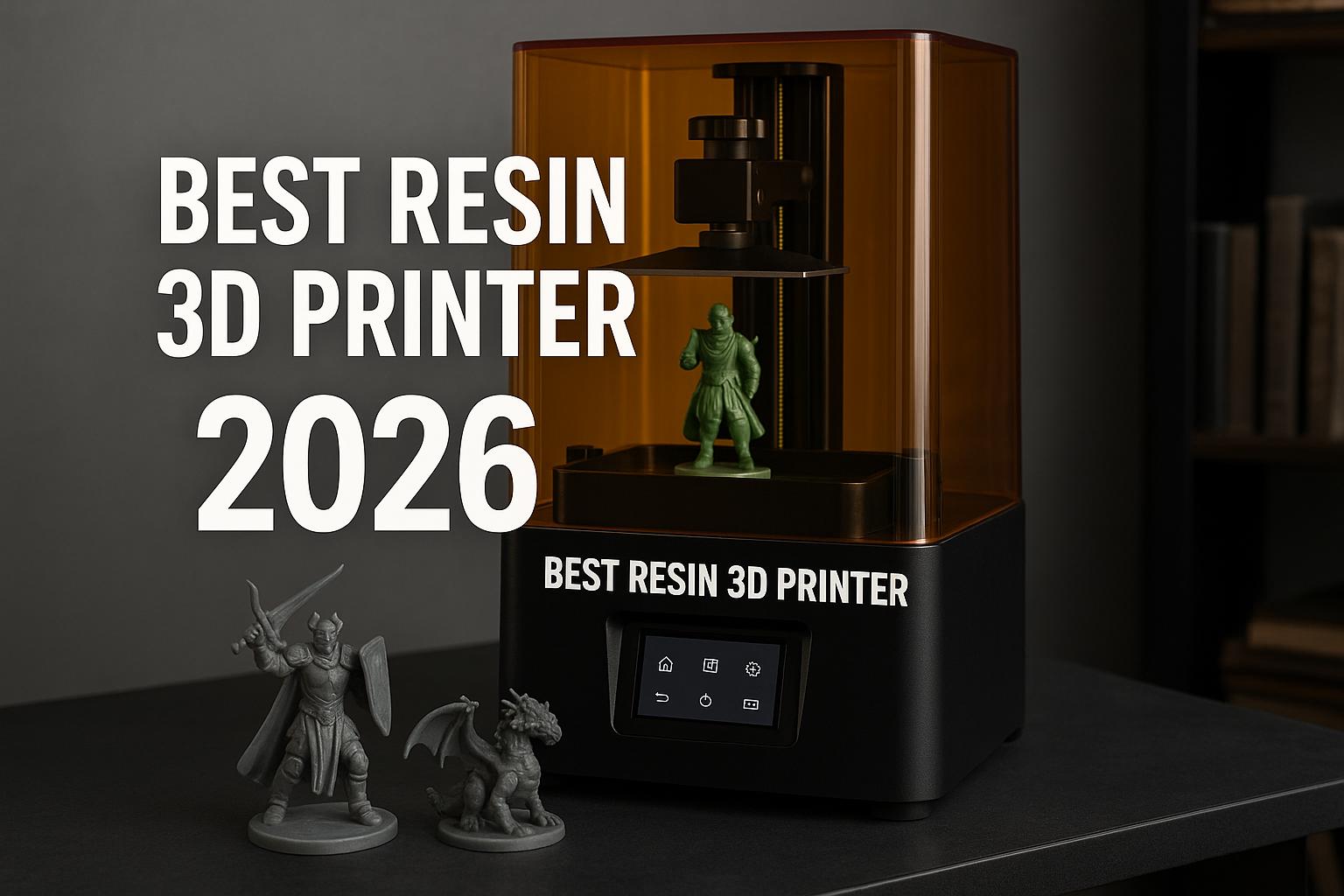
If your goal is to print crisp heroes, monsters, terrain accents, and display-quality busts, the best resin 3d printer for miniatures is usually not the biggest or most expensive machine on the market. In my view, it is the one that delivers fine surface quality, dependable small-part accuracy, and a workflow that does not turn every session into cleanup fatigue. That matters even more when you are printing best resin printer for dnd miniatures candidates, because tiny shields, daggers, fingers, horns, and facial details expose every weakness in your setup.
At the same time, many hobbyists looking for a miniature printer are also comparing filament machines. That is why search terms such as best 3d printer for beginners under 500, best 3d printer for beginners that just works, or best quiet 3d printer for apartment often appear in the same buying journey. Resin and filament printers solve different problems. For miniatures, resin still holds the edge in detail. For helmets, big props, and functional parts, filament often makes more sense. I will keep that distinction clear throughout this guide.
Quick takeaway: If you mainly print tabletop figures, boss monsters, and painter-ready display pieces, a resin printer is still the strongest choice in 2026. If you also need cosplay helmets, Etsy production, or large functional parts, consider whether a filament machine belongs in your setup as a second printer rather than a replacement.
What Makes a Resin 3D Printer Ideal for Miniatures
Miniature printing raises the bar in a very specific way. A machine can be competent on larger decorative objects and still disappoint when asked to reproduce chainmail, pupils, cloth folds, bone textures, or the sharp edges of a sword hilt. What I look for first is high detail and surface quality. Resin printers excel because they cure layers with light rather than squeezing melted plastic through a nozzle. That makes it easier to preserve subtle sculpted information.
The next requirement is consistent small-part accuracy. One successful print is not enough. For RPG players, painters, and small sellers, consistency matters more than headline specs. Thin spears must form cleanly, support contact points should remain manageable, and rows of repeated miniatures should come off the plate with predictable results.
Finally, there is reliable support for tabletop models. In practical terms, that means stable exposure behavior, enough build quality to avoid random failures, and slicing support that handles dense batches of miniatures well. In my experience, hobbyists often blame the sculpt or the resin when the real issue is a printer that makes support dialing-in too fragile.
A good miniature resin printer should disappear into the background. You should spend more time choosing poses, supports, and paint schemes than troubleshooting unexplained failures.
Key Features to Compare in 2026
Resolution, layer precision, and print speed
Resolution remains central, but I think buyers sometimes interpret it too narrowly. Screen resolution and pixel density matter, yet they are not the whole story. Mechanical stability, exposure tuning, resin quality, and anti-aliasing settings also influence the finished look. For miniatures, especially faces and textured armor, tiny improvements in print precision are easy to see under primer.
Print speed is useful, but it should not outrank reliability. Resin printers can be marketed around speed, just as filament models are sold on numbers like 500 mm/s or 600 mm/s. However, for miniatures, a slightly slower printer that produces cleaner details and fewer failed supports is usually the better investment.
Build volume for single figures or full squads
Build volume is more important than many first-time buyers expect. If you only print individual characters, a modest plate may be enough. But if you plan to produce full squads, multiple monsters, terrain add-ons, or Etsy stock, capacity changes the economics of printing. Larger plates let you batch more parts at once, though they also increase resin usage and can make failed jobs more painful.
This is where some shoppers drift toward filament searches such as best large format 3d printer for cosplay or best 3d printer for cosplay helmets. Those are valid categories, but they serve a different purpose. Resin is excellent for heads, accessories, masks, and detail parts; full helmets and giant props usually belong to large-format filament machines instead.
User interface, connectivity, and software workflow
Ease of use has improved markedly in recent years. Touchscreens are more responsive, file transfers are easier, and slicers are more polished. Still, software workflow remains a hidden differentiator. I recommend paying attention to support generation, resin profiles, remote monitoring if available, and how intuitive failure recovery feels.
This matters for newcomers searching for the best 3d printer for beginners that just works. In resin, there is no completely mess-free machine. But there are definitely systems that feel more manageable, especially if the menu system, vat access, and cleanup steps are sensibly designed.
Best Resin 3D Printer Categories for Different Users
Beginner-friendly options with simple setup
For newcomers, the best choice is often a smaller or mid-sized resin printer with straightforward leveling, well-supported slicing profiles, and a simple post-processing routine. If your budget is modest, this category can deliver excellent miniature quality without overwhelming you.
Interestingly, buyers entering from the filament world often compare resin against terms like best 3d printer for kids and beginners or best enclosed 3d printer for beginners. I would be careful here. Resin printing is not the category I would casually recommend for children because the materials require careful handling, gloves, and ventilation. A beginner adult hobbyist, yes. A family-friendly general craft tool, not usually.
Mid-range choices for hobbyists printing often
This is the sweet spot for many tabletop gamers and painters. You get enough plate space for efficient batches, better screens and mechanics than entry-level machines, and generally more polished software support. If you print every week, mid-range value can be stronger than entry-level savings because fewer failed jobs and cleaner detail translate into better long-term satisfaction.
For regular hobby use, I think this category offers the best balance of output quality, cost, and learning curve. It is also the most realistic zone for people considering side-income work such as custom squads, busts, and accessories.
Premium models for advanced painters and creators
Premium resin printers make sense for advanced painters, small studios, and sellers who need capacity, speed, and consistency. At this level, larger screens, stronger frames, smarter exposure systems, and convenience features can save enough time to justify the extra spend.
That said, premium does not always mean best value. If you mostly print a few DnD heroes per month, paying for a top-tier machine can be unnecessary. In the same way that not everyone needs the best 3d printer for small business or the best 3d printer for etsy sellers, not every miniature hobbyist needs a premium resin platform.
| Property | Entry-Level Resin Printer | Mid-Range Resin Printer | Premium Resin Printer |
|---|---|---|---|
| Best use | Learning, casual miniatures | Regular hobby printing, squads, busts | High-output work, advanced painting, small-shop use |
| Typical strength | Lower upfront cost | Best balance of quality and usability | Higher consistency, convenience, throughput |
| Main tradeoff | Less capacity and fewer comfort features | Moderate total cost | Higher price and accessory costs |
| Who should buy | Curious beginners | Committed tabletop hobbyists | Power users and sellers |
Print Quality Factors That Matter for DnD Models
Sharp facial details and weapon edges
Nothing ruins a good fantasy sculpt faster than mushy eyes, rounded teeth, or softened blade edges. Good resin printing preserves those features, but it also depends on proper support orientation and exposure settings. A machine with strong baseline precision gives you far more room to get these details right.
Smooth armor, cloaks, and organic textures
Beyond sharpness, miniatures need smooth transitions. Cloaks, shoulder plates, skin, monster scales, and leather wraps should feel sculpted rather than stepped. This is one reason resin remains the leading option for painter-friendly miniatures in 2026. The smoother the base print, the less sanding and repair work you face before priming.
Support placement and cleanup results
Support scars can make or break a print. A strong printer helps, but support strategy still matters just as much. Delicate contact points reduce visible marks, yet they also make failures more likely. For miniatures, especially fragile DnD sculpts, the best setup is one that lets you find a stable middle ground: enough support for reliability, but not so much that cleanup destroys details.
Practical rule: For tabletop miniatures, I would prioritize cleaner supports and more dependable success over maximum speed. Failed tiny parts cost more time than a slightly longer print cycle.
Resin, Safety, and Post-Processing Essentials
Choosing standard, tough, or specialty resin
Standard resin can produce beautiful display pieces, but not every formula handles drops and gameplay equally well. If your miniatures will be transported, used often, or handled by multiple players, tough or specialty blends may be worth considering. They can improve durability, though sometimes at a higher price or with different exposure needs.
For display busts and painters' showpieces, standard resin may be enough. For gaming pieces, durability starts to matter more than raw sharpness alone.
Ventilation, gloves, and safe handling habits
This is the part buyers should not gloss over. Resin printing requires gloves, good ventilation, careful storage, and proper disposal habits. Fresh resin and uncured waste should be handled responsibly. If you live in a tight apartment or shared room, these logistics matter as much as screen resolution.
That is why a search like best quiet 3d printer for apartment can be misleading when applied to resin. Even a quiet resin printer still involves odors, cleaning liquids, and curing steps. Noise is only one part of apartment suitability.
Washing, curing, and finishing miniatures
Post-processing is where many first-time buyers underestimate the workload. You need to wash prints, cure them thoroughly, remove supports carefully, and often do minor finishing before paint. The good news is that once you establish a routine, it becomes much faster. The less good news is that you should budget both time and money for these accessories from the beginning.
- Gloves and eye protection
- Wash and cure equipment or equivalent setup
- Isopropyl alcohol or approved cleaning solution
- Paper towels, filters, and waste containers
- Replacement films and maintenance supplies
How to Choose Based on Budget and Space
Entry-level value versus long-term upgrade potential
If your budget is limited, it can be tempting to buy the cheapest workable resin printer and upgrade later. Sometimes that is sensible. Other times, paying a bit more for a machine with better consistency and workflow ends up cheaper over a year of failed prints, wasted resin, and frustration.
This is similar to buying the best 3d printer for beginners under 500 in the filament market: the lowest sticker price is not always the strongest value. For miniatures, a reliable mid-tier resin printer can be a smarter purchase than the absolute bargain option.
Desktop footprint and noise considerations
Resin printers do not just occupy the footprint of the machine itself. You also need room for bottles, cleaning stations, curing gear, gloves, tools, and drying space. In other words, assess the full workstation, not just the printer dimensions.
Noise is usually less dramatic than on some high-speed filament machines, but the bigger issue is still process management. If your workspace is a bedroom or an area with limited ventilation, I would think carefully before committing.
Ongoing costs for resin, films, and accessories
The printer is only the first expense. Consumables add up: resin, FEP or equivalent films, gloves, cleaning fluid, paper supplies, replacement tools, and occasional failed jobs. If you plan to sell prints, batch output can offset those costs. If you print sporadically, the economics look different.
| Cost Area | Why It Matters | Buying Advice |
|---|---|---|
| Printer price | Sets your entry point | Do not let price alone outweigh reliability |
| Resin | Recurring material cost | Choose by durability as well as detail |
| Post-processing tools | Required for safe workflow | Budget for them from day one |
| Replacement films and wear parts | Maintenance affects uptime | Check availability before buying |
Comparison Snapshot: Resin Miniatures vs Filament Alternatives
Although this guide is focused on resin, many readers are also comparing broader creator tools. If your projects include props, classroom use, engineering models, or product prototypes, some of Creality's current filament machines may be more appropriate for those jobs than any resin printer. They are not direct replacements for miniature-quality resin output, but they are relevant if your hobby extends beyond tabletop figures.
For example, the [url="https://www.amazon.com/dp/B0F5HJMMT9?ref=t_ac_view_request_product_image&campaignId=amzn1.campaign.36N63R999Y0GY&linkCode=tr1&tag=simonsreccos-20&linkId=amzn1.campaign.36N63R999Y0GY_1780058654882",name="Creality K2 Plus Combo",title="This link leads to the Creality K2 Plus Combo on Amazon"] is positioned as a premium all-in-one multicolor-ready filament printer with CFS support, while the [url="https://www.amazon.com/dp/B0F5H4SSNS?ref=t_ac_view_request_product_image&campaignId=amzn1.campaign.QP7BWTP45334&linkCode=tr1&tag=simonsreccos-20&linkId=amzn1.campaign.QP7BWTP45334_1780058661707",name="Creality K2 Plus",title="This link leads to the Creality K2 Plus on Amazon"] targets large-format users who need scale and speed. The [url="https://www.amazon.com/dp/B0D922NSSQ?ref=t_ac_view_request_product_image&campaignId=amzn1.campaign.13FRT9H9H29NH&linkCode=tr1&tag=simonsreccos-20&linkId=amzn1.campaign.13FRT9H9H29NH_1780058662913",name="Creality K2 SE",title="This link leads to the Creality K2 SE on Amazon"] sits closer to the budget-minded desktop category, the [url="https://www.amazon.com/dp/B0FDG38DSW?ref=t_ac_view_request_product_image&campaignId=amzn1.campaign.2LOC5X37HAZ&linkCode=tr1&tag=simonsreccos-20&linkId=amzn1.campaign.2LOC5X37HAZ_1780058664827",name="Creality K2 Pro Combo",title="This link leads to the Creality K2 Pro Combo on Amazon"] emphasizes multicolor creation and advanced materials, and the [url="https://www.amazon.com/dp/B0D95Z1W6K?ref=t_ac_view_request_product_image&campaignId=amzn1.campaign.SESNPTWUE0Q9&linkCode=tr1&tag=simonsreccos-20&linkId=amzn1.campaign.SESNPTWUE0Q9_1780058665579",name="Creality K1C",title="This link leads to the Creality K1C on Amazon"] is the value-leaning CoreXY option for faster, tougher filament work.
If your main goal is the best resin 3d printer for miniatures, keep these in perspective: they are more relevant to props, production, and functional printing than to painter-grade 28 mm figures. Still, if you want one additional machine for terrain, organizers, cosplay parts, or small business output, it may be worth it to check the current price on those models and compare their bundle terms carefully, since CFS inclusion, filament discounts, and promotional pricing can vary by listing.
- Resin printers usually deliver finer miniature detail and smoother surfaces
- Excellent for faces, armor texture, monsters, busts, and painter-ready models
- More space-efficient for dense batches of small figures
- Messier workflow with washing and curing requirements
- Ventilation and safety habits are essential
- Less suitable for very large props, helmets, or functional structural parts
Recommendation: Finding the Best Resin 3D Printer for Your Tabletop Needs
The right choice depends on what you actually print. If you mainly want character models, monsters, and detailed display pieces, focus on resolution, repeatability, and cleanup experience rather than chasing the largest machine. If you print army-scale batches or sell miniatures, a larger and more stable mid-range or premium resin printer may pay for itself in throughput and fewer failed jobs. If you are entirely new, prioritize a manageable workflow and total setup cost over headline specifications.
I would match your printer to your model size and your patience level. Small fantasy characters demand sharpness. Larger monsters benefit from better build capacity. And if you are still learning, ease of use matters more than raw top-end capability. In short, the best resin printer for dnd miniatures is the one that repeatedly gives you clean details without creating an exhausting post-processing routine.
Before you buy, compare more than the base machine. Include resin cost, replacement films, wash-and-cure gear, ventilation, gloves, software comfort, and available room on your desk. That fuller view is what separates a smart hobby purchase from an impulse buy.
If your projects also extend into props, terrain, classroom work, or product design, discover the current Creality lineup linked above and compare them alongside your resin shortlist. For miniature-first buyers, resin remains the strongest path. For mixed-use creators, a resin printer paired with the right filament machine can be the more flexible long-term setup.
Final buyer checklist
- Choose resin if miniature detail is your main priority
- Choose plate size based on whether you print single heroes or full squads
- Budget for washing, curing, gloves, and ventilation from the start
- Do not confuse beginner-friendly filament categories with beginner-safe resin workflows
- Check the current price, bundle details, and accessory needs before you order
For readers who also need a fast filament printer for larger projects, I recommend reviewing the linked Creality options carefully, especially if you are comparing the best multicolor 3d printer for beginners, the best enclosed 3d printer for beginners, or the best 3d printer for small business categories. For your DnD miniatures themselves, though, resin still earns the top spot in 2026.